Professional radon mitigation
When elevated radon is confirmed, the next step is reducing the amount of radon entering your home. Radon Pros designs and installs mitigation systems based on the home's construction and conditions.

What is radon mitigation?
Radon mitigation is the process of reducing radon entering and accumulating within a building.
Residential systems commonly use active soil depressurization techniques, where a fan and vent piping create negative pressure beneath the building and exhaust soil gas outdoors. System design varies — not every house uses exactly the same system.
Every home is different
System design may depend on a range of factors. Radon Pros evaluates the home before recommending a specific approach.
Radon Pros does not promise a specific system layout before inspecting the home.
Our mitigation process
Review the radon results
Understand the test and the conditions under which it was performed.
Evaluate the home
Consider foundation construction and potential radon entry pathways.
Design the system
Develop a mitigation approach appropriate for the property.
Install the system
Install system components according to the selected design and applicable professional practices.
Test after installation
Recommend appropriate post-mitigation testing to evaluate system performance.
What does a mitigation system look like?
A typical active soil depressurization system includes several key components. Actual configurations vary by home.

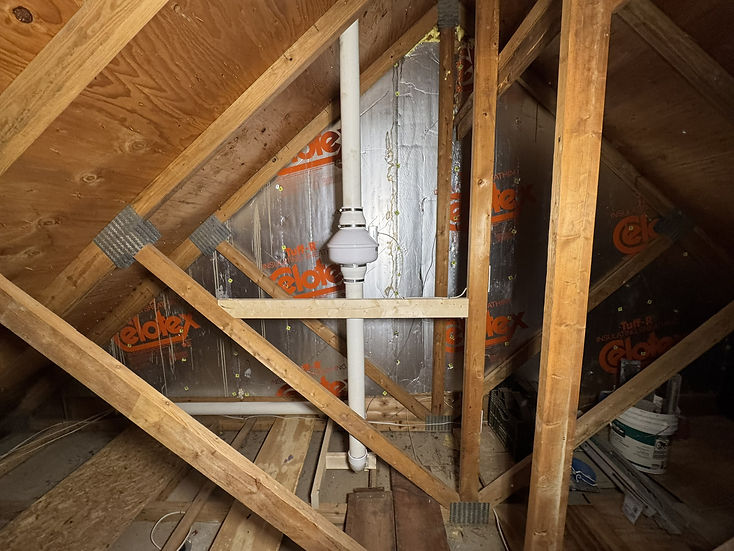
- •Sub-slab suction pointA suction point created beneath the slab to draw soil gas.
- •Vent pipePiping that routes soil gas from beneath the home to the exterior discharge.
- •FanCreates the negative pressure that pulls soil gas through the system.
- •Exterior dischargeReleases soil gas outdoors, away from openings and occupied areas.
What about crawlspaces?
Crawlspace mitigation may involve techniques such as sub-membrane depressurization, where an appropriate soil-gas-retarding membrane is installed and soil gas is drawn from beneath it.
Not every crawlspace requires the same system. Radon Pros evaluates the crawlspace and recommends an approach appropriate for the home.
Does sealing alone fix radon?
Sealing cracks and openings can be part of an overall approach, but it is often not sufficient as the sole mitigation strategy.
That doesn't mean sealing is never useful — it can play a supporting role within a broader system design.
About results
The goal of mitigation is to reduce radon exposure by reducing radon levels in the occupied space. Post-mitigation testing is used to evaluate the result. Radon Pros does not promise a specific percentage reduction or a particular final radon concentration.
Request a quote
Tell us about your home and your test results, and we'll help you understand the appropriate mitigation approach.